Helpline

0300 111 1234

Treatment

Treatment

This section outlines the main treatment options for ADPKD, including medications, monitoring, and supportive therapies. It also covers how care may change over time, helping you understand the options available to manage your condition and maintain quality of life.

To find out more about the many ways we offer support for those affected by PKD, please see our Get Help page.

  • Someone in a white coat with a clipboard talking to another person (close up).

    Progression

    ADPKD can progress at different rates for different people. This resource explains how the condition may change over time and what factors can influence its progression.

    Progression

  • Differently coloured blister packs of medicines.

    Medications

    This section describes medicines used to support your health, and medications to avoid.

    Medications to treat ADPKD

  • Up close shot of a surgeon's face in surgery, from below. With operating lights in the background

    Surgical procedures

    This section gives an overview on surgery for ADPKD, as well as more detailed information on kidney removal and kidney and liver transplant.

    Surgical procedures

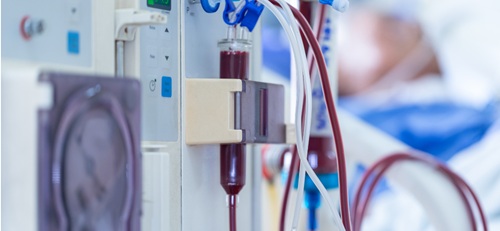
  • Close-up of a dialysis machine

    Dialysis

    This set of resources gives an overview of dialysis, and  more detailed information on two types of dialysis Haemodialysis and Peritoneal dialysis

    Dialysis

  • Close up of someone laying on their front being given a back massage

    Complementary therapies

    Some people explore complementary therapies alongside medical treatment. This resource outlines common approaches and emphasises the importance of discussing them with your healthcare team.

    Complementary therapies

  • Illustration of polycystic kidneys in bright pink.

    Draining and treating cysts

    In some cases, cysts may be treated directly to relieve pain or complications. This resource explains the procedures available and when they may be considered.

    Draining and treating cysts

Read more …Treatment

  • Hits: 3191

Appointment tips for parents of children with ARPKD (NEW)

Appointment tips for parents of children with ARPKD

These tips are for parents and guardians of children with autosomal recessive polycystic kidney disease (ARPKD). They’re to help you and your child get the most out of appointments with their GP, kidney doctor and other healthcare professionals.

We have a separate guide for adults. See appointment tips for adults with polycystic kidney disease (PKD).

Doctor’s appointments can be stressful and worrying at times for both you and your child. You might sometimes come away confused or realize that you didn’t ask the questions you planned to.

Our tips below can help you to feel confident and get the most out of your appointments. This will help you to get your child the care, support and information they need to live well with ARPKD.

Contents

Giving your child control and support

It’s good to help children play an active role in their health appointments, even when they’re young. This can help them feel in control of their health. It will also help them build the skills they’ll need to manage their ARPKD as they grow up.

How much your child can take part in, or lead, chats and decisions about their health will depend on their age and skills. You’ll need to judge what’s right for them. It might also help to chat to other parents and guardians of children with ARPKD in our ARPKD Facebook group.

By age 6, most children can answer questions about how they feel. Most teenagers can make choices about their care themselves, although they may want your support and advice.

You may be surprised by how much your child can manage on their own when given the chance. Equally, if your child doesn’t want to lead the chat, or begins to struggle, be ready to offer help. Encourage them over time to get more involved.

In the tips below, we give some ideas on how you can help your child feel confident and involved in appointments.

Top tips for successful appointments

Prepare together

❑ Explain to your child what will happen.

  • If they’re young, you could use a teddy or toy to act out a medical appointment or use colouring pages. Your hospital might have a video to explain things to children (see the links at the end of this page for examples).
  • Give an honest answer if your child asks whether a procedure might hurt.

❑ Check whether your child has any new symptoms.

  • Write them down together. How long have they had them and how often? How bad are they? How are they affecting your child’s life? Does anything make them better or worse?

❑ Check who your child would like to go to the appointment with (if there’s a choice).

  • They might find that a particular relative is most reassuring for medical visits. Equally, older children may want to go on their own.

❑ Together, prepare a list of questions for the doctor.

  • Choose the most important questions together, and who will ask them. If you have a lot to discuss, ask for a longer appointment. There’s a list of example questions to ask at kidney check-ups later on this page.
  • For older children, respect their choice if they want to prepare this list alone.

❑ Are you happy with the appointment details? If not, request changes.

  • If you want to change arrangements for the appointment, call to ask. The clinic will help if they can.
  • Changes could include the doctor you see, whether the appointment is face-to-face, telephone or video, and the day and time.
  • If you or your child need an interpreter, ask early for this to be arranged.

❑ Plan the trip so you don’t end up rushing.

  • How will you get to the surgery or hospital? Is parking available and what is the cost? Plan your route with extra time for possible delays. If you have access needs, ask early for support to be arranged.
  • Ask your child which snacks, drinks and activities they’d like to take for the journey and waiting room (for example: a game, book, video or colouring book). Younger children may like to take a favourite toy for comfort. Ask your child to help you pack these to help them feel involved and ready.

❑ For video and phone appointments, plan to be somewhere quiet, private and with a good signal.

  • Think through the logistics of how you and your child will both be involved in video and telephone calls. Request a video call, if possible — this is an easier way for everyone to be involved. If a phone call is the only option, use a speaker phone if you can.
  • Make sure your phone and computer have enough battery. For video calls, check you have the invite link and do a test run if possible. Is there a number you can call for technical support?

❑ If your child is going to have a test or procedure, make sure you prepare correctly.

  • Read the letter carefully and follow any instructions given (such as your child not eating or drinking beforehand).
  • The surgery or clinic might ask for a urine (wee) sample. Ask the receptionist if one is needed when you arrive. If so, you can plan the best time for your child to go to the toilet and drink more liquid if needed.
  • If your child is worried by blood tests, chat to the surgery or clinic about what can help. For example, the clinic may have a play specialist who can help your child have a better experience. Or the clinic might be able to give you a numbing cream to put on your child’s arm before the appointment starts. This means less time waiting for the cream to work during the appointment.
  • Contact the clinic beforehand if you’re unsure of anything.

❑ Collect any information the doctor has requested.

  • When your child sees a specialist for the first time, they may want your child’s and family’s medical history.
  • Make a list of the names and doses of any medicines, supplements and vitamins your child takes. If easier, you could take photos or take the packets with you.
  • If you have extra information to share, get this ready. For example, you might have measurements of your child’s blood pressure or weight.

At the appointment

❑ Explain that you have some notes you’ll be using together.

  • This can help you both to focus. Start with the most important points and tick things off as you go.

❑ Let your child answer and ask questions themselves if possible.

  • This will help them to feel in control and build their confidence in managing their health. It’s okay to prompt your child or to ask if you can add extra details if things get forgotten. But try not to take over.

❑ Help your child to be open and honest about their symptoms and concerns.

  • This might mean discussing things you or your child find embarrassing. For older children, respect their privacy and offer to leave the room if there are things they don’t want to discuss in front of you.

❑ Write down key details.

  • It’s easy to forget details after an appointment, so write things down. If you prefer, ask if you can record the discussion on your phone. Some video call systems allow you to record the discussion (remember to ask first). You can also ask your doctor to print out useful information or provide a copy of your child’s notes, reports and letters.

❑ Check your child understands.

  • Ask the doctor to repeat or explain things differently if either of you don’t understand.
  • Encourage your child to ask questions when they need.
  • Ask for a child-friendly leaflet or a website where your child can learn more.

❑ Ask about the benefits and risks of any treatments the doctor recommends.

  • For example, how might a procedure or treatment help your child? How serious and common are the risks? Are there other options?

❑ Check when and how you’ll get your child’s test results.

  • Who can you or your child contact if you don’t receive a letter or phone call when expected?

❑ Who can you or your child contact with questions?

  • Is there a doctor or nurse who you or your child can contact by phone or email? Alternatively, how can you book a follow-up appointment?

Pause for thought

❑ If you need a moment to chat to your child, say so.

  • You might want to pause to get your child’s preferences and think things through together. For video calls, you could ask for a break (and press ‘mute’) to give you and your child a moment to talk.

❑ Check your notes.

  • Have you covered everything? If you’re out of time but have more questions, ask for a follow-up appointment.

❑ Repeat key information back to the doctor to check you and your child understand correctly.

After the appointment

❑ Check how your child is feeling.

  • Was there anything that worried them?
  • Give them reassurance, support and love after the appointment.
  • Check how they’re feeling a while later, when they’ve had time to think.

❑ Write down any new questions you and your child have.

  • Help your child to write down new questions they (or you) have after the appointment. You may be able to ask them by telephone, video call or email. Or you could ask for a follow-up appointment.

❑ If your child’s symptoms worsen or they have side effects, tell the doctor.

  • Contact the team to let them know. Contact details are normally on letters from the clinic.
  • Don’t wait for your child’s next check-up if it’s not soon. Use NHS 111 for advice if your child has new symptoms and you’re unsure what to do.

❑ If you don’t receive test results or a referral when expected, call the surgery or hospital.

  • Sometimes, results or referrals are delayed or overlooked. A gentle reminder can help. Remember to encourage older children to do this themselves — it may be daunting for them at first but it’s a useful skill to learn.

❑ If you or your child are unhappy about their care, give feedback or make a complaint.

  • It’s your choice whether you do this, but it can help services improve. For GP surgeries, you could contact the practice manager or ask the receptionist how you can give feedback or complain. For hospitals, you could contact their Patient Advice and Liaison Service (PALS) to get started.

Questions for children to ask at kidney check-ups

Here are some of the common questions people ask at kidney check-ups. We have written these for your child to ask, but you may need to ask some of these questions on their behalf, depending on their age.

About my test results

  • How well are my kidneys working?
  • How might my kidney health change in the next few years?
  • Is my blood pressure okay?
  • Do my test results show any changes?
  • What does this word/result mean?
  • Do we need to change my treatment?
  • When is my next check-up?

About treatments

  • Do I need any treatments? What are the good and bad things about each one?
  • Could I get unwell if I don’t have treatment?
  • Could the treatment make me unwell by causing side effects?
  • What side effects should I look out for? What should I do if I get them?
  • What can help with any symptoms or side effects I get?
  • How often should I take my medicine and what is the right dose?
  • What should I do if I forget to take my medicine?

About me and my life

  • How might ARPKD affect me at school and at home?
  • How can I manage my ARPKD well so that it doesn’t affect my life as much?
  • What foods and drinks are good for me?
  • Are there any sports or hobbies that I need to be careful about doing?
  • Are there more people who can help me manage my ARPKD? (You could ask to see a doctor who is an expert in what to eat, how to cope with your feelings, or how to manage pain, for example.)

More information from the PKD Charity

Information and support from others

For parents and guardians

For children

Further information

All of our publications are based on references but these are removed for ease of reading on our webpages. A version of this webpage with references included is available upon request by emailing [email protected]

Authors and contributors

Written by Hannah Bridges, PhD, independent medical writer, HB Health Comms Limited. Expert review by Charlotte Futcher, Hypertension Clinical Nurse Specialist, Guy’s and St Thomas’ NHS Foundation Trust.

With thanks to all those affected by PKD who contributed to this publication.

Ref No: ARPKD.AT.V2.0
© PKD Charity January 2026
Latest updated: January 2026
Due for medical review: January 2029

Disclaimer: This information is primarily for people in the UK. We have made every effort to ensure that the information we provide is correct and up to date. However, it is not a substitute for professional medical advice or a medical examination. We do not promote or recommend any treatment. We do not accept liability for any errors or omissions. Medical information, the law and government regulations change rapidly, so always consult your GP, pharmacist or other medical professional if you have any concerns or before starting any new treatment.

If you don’t have access to a printer and would like a printed version of this information sheet, or any other PKD Charity information, call the PKD Charity Helpline on 0300 111 1234 (weekdays, 9am–5pm) or email [email protected].

The PKD Charity Helpline offers confidential support and information to anyone affected by PKD, including family, friends, carers, newly diagnosed or those who have lived with the condition for many years.


Read more …Appointment tips for parents of children with ARPKD (NEW)

  • Hits: 1242

Voices to Vision - National Listening Events

 Co-designing a National Kidney Disease Strategy

Kidney disease affects millions of people in the UK and is one of the fastest-growing health challenges, yet it has been under-prioritised for far too long. PKD Charity, alongside Kidney Care UK, Kidney Research UK, the National Kidney Federation, and the UK Kidney Association is calling for a national kidney disease strategy focused on prevention, earlier diagnosis and better care.

To make sure this strategy is grounded in real experiences, we are running Voices to Vision, a national listening programme throughout 2026. This is a real opportunity to improve kidney services – but only if people who use, deliver and plan kidney services are central. Your experiences can show what works, where services fall short and what must change.

Register your interest in our virtual or in-person listening events

Voices to Vision Listening Events - when and where

Ways to get involved

There are many ways to take part in Voices to Vision, including in-person and virtual listening events, surveys and online sessions.

There will also be:

  • Surveys to gather evidence and priorities for change
  • Webinars exploring new ideas and innovations in kidney care
  • Virtual workshops on key challenges and opportunities
  • Expert interviews and panel discussions

Who can take part?

We want to hear from anyone with a connection to kidney disease, including:

  • People living with kidney disease
  • Families, carers and loved ones
  • Healthcare professionals and service staff
  • Researchers, charities and industry partners

The strategy will mainly focus on services in England, but we welcome contributions from Wales, Scotland and Northern Ireland, as changes in one nation can affect care across the UK. Whether your experience is recent or long-term, personal or professional, your voice matters.

Working together for change

At PKD Charity, we’re encouraging everyone in our community to take part. Please sign up to attend a free listening event and share your views.

Register your interest in our virtual or in-person listening events


What else can you do?

You can help by writing to your MP and asking what the Government is doing to tackle kidney disease. We’re calling on MPs to raise this issue with the Secretary of State for Health and Social Care, Wes Streeting MP.

We’ve made it easy to take action, with a ready-to-use template letter for you to send to your MP – all you need to do is add your own experience and send it. Please note: if your MP is Wes Streeting MP, ask him to write to the Prime Minister instead.

Take action today

Find out who your local MP is and get their contact details >

Download template letter to send to your MP

Template letter for MPs


If you would like to speak to us about what support we can offer you or a loved one, please visit PKD Support or contact us today and speak to a member of our team.

Stay up to date with PKD Charity events, patient stories and research news as it happens by signing up for our free e-news or printed newsletter.

PLEASE DONATE

  • Hits: 2600

Liver transplants in ADPKD

Liver transplants in ADPKD

This information is for people with autosomal dominant polycystic kidney disease (ADPKD) who have symptoms caused by liver changes. It’s also for their families, friends and carers. Most people with ADPKD never need a liver transplant but a few do.

Find out here which people are offered a liver transplant, the risks and benefits, and other options.

Contents

Key facts

  • Most people with ADPKD have liver cysts by their mid-thirties. These liver changes are called polycystic liver disease (PLD).
  • Most people don’t get symptoms from PLD and very few need a liver transplant.
  • People with PLD only have a liver transplant if their PLD is causing big problems that can’t be treated in a different way.
  • Most people who need a liver transplant have a much better quality of life after the operation. A few don’t.
  • The operation has some risks, and sometimes the donated liver doesn’t work well.
  • People who have had a transplant need to take medicines called immunosuppressants for life. These can cause side effects and new health problems.
  • If your liver doctor (hepatologist) thinks a liver transplant might help you they’ll explain why.
  • If you want to go ahead, they’ll refer you to a transplant centre. A transplant team will give you more information and do tests to check whether a transplant could help you.
  • People with PLD tend to wait about 1 to 3 years for a liver transplant.
  • You’ll need to stay in hospital for 1 to 2 weeks (possibly longer) after the operation.
  • It takes a few months to recover at home.

How does ADPKD affect the liver?

Most people with ADPKD have liver cysts by their mid-thirties. These liver changes are called polycystic liver disease (PLD).

Your liver is likely to still work well if you get these cysts. You probably won’t get symptoms or need treatment.

A few people with PLD get liver problems such as:

  • a large liver which can cause pain, feeling breathless, and problems eating
  • an infected cyst
  • a bleeding cyst
  • a squashed vein in the liver

We explain PLD symptoms on our web page on polycystic liver disease.

Will I need a liver transplant?

Most people with ADPKD and PLD never need a liver transplant. A few people need a liver transplant because their PLD is causing severe problems that can’t be treated in a different way.

Most people with ADPKD and PLD who have a liver transplant are women. PLD tends to affect women more greatly and at a younger age than men. This is because the female hormone oestrogen increases the growth of liver cysts.

A liver doctor (hepatologist) and transplant surgeon will usually only recommend a liver transplant if:

  • You have a very large liver causing symptoms that are badly affecting the quality of your life.
  • Or, you have ongoing liver complications (see below).
  • And treatments so far have not worked.
  • And you have no other treatment options.
  • And there are no reasons a liver transplant wouldn’t be right for you.

Liver complications that a liver transplant can help include:

  • cyst infections that keep coming back
  • blocked blood flow in large liver veins
  • fluid collecting in your abdomen (tummy)
  • bleeding from swollen blood vessels
  • not getting enough nutrients from food, making your body weak

If you also need a kidney transplant, you might have this at the same time.

The benefits of a liver transplant

A liver transplant cures PLD. Most people feel much better once they’ve recovered from the surgery.

Most people get fully back to ‘normal life’ after getting a liver transplant. They have a similar quality of life to people without PLD.

In one study, 9 out of 10 people with PLD reported benefits such as:

  • big improvements in symptoms such as being sick, feeling tired, difficulty sleeping, not feeling hungry and depression
  • feeling more attractive and more interested in sex

However, 1 in 10 people said the quality of their life got worse after a liver transplant. So, although a liver transplant is likely to improve your quality of life, your transplant surgeon can’t promise this.

The risks of a liver transplant

Most liver transplants are very successful. But they come with some risks. These include risks from the operation, from the donated liver not working, and from medicines called immunosuppressants. We explain these below.

These problems usually get better with treatment. Less often, they can become severe or life-threatening.

We understand that it’s scary to read about the risks of having a transplant. We want to be honest with you though. It’s a good idea to ask your liver specialist and transplant surgeon to explain each risk to you. They can talk you through which risks might be smaller or greater for you.

Your transplant team will monitor you closely during and after your surgery. In this way, they can spot and treat problems quickly.

Risks of surgery

It’s common to have a complication during or after transplant surgery.

These problems can include:

  • more bleeding than expected
  • leaks of bile (a fluid made by the liver that helps you digest food)
  • a blockage in the tube that carries bile to your gut
  • a blood clot in the liver
  • an infection

Your surgeon can explain whether your surgery is lower or higher risk than average. For example, if you’ve had liver surgery before, the operation can be trickier. This is because you may have scar tissue binding your liver to nearby tissues. The medical term for this is ‘adhesions’.

Risk of the liver not working

Sometimes, problems after surgery stop the donated liver from working. The liver can also stop working if your body fights it. This is called ‘rejection’.

To reduce the chance of rejection, you’ll need to take medicines called immunosuppressants for life. These dampen your immune system.

If your body starts to reject your liver, this can usually be stopped with higher doses of immunosuppressants. It’s unusual for the liver to stop working altogether. But if this happens, you’ll need another transplant urgently.

Risks of immunosuppressants

Immunosuppressants can have side effects.

They can also increase your risk of some other health problems:

  • infections
  • some cancers
  • high blood pressure
  • diabetes
  • unhealthy levels of lipids (fats) in the blood
  • weak bones (osteoporosis)

Your treatment team will explain ways to reduce these risks. Treatments are available for these problems.

Thinking through the benefits and risks

It can be hard to weigh up the benefits and risks of having a liver transplant. It’s an important decision, so give yourself plenty of time to think it through.

Ask your transplant team to explain all the benefits and risks carefully.

To help you decide whether to go ahead, you may want to:

  • ask your liver doctor how your PLD is likely to affect you if you don’t have a liver transplant
  • check if you have any other treatment options
  • speak to your family and friends
  • talk to other people with ADPKD who have had a liver transplant
  • ask for a follow-up appointment to discuss things again after you’ve had time to think

You can connect with people with ADPKD through our support groups and Facebook groups.

Our helpline is open 9:30am to 5:00pm, Monday to Friday, except bank holidays, on 0300 111 1234. You can also contact us on Facebook messenger or email [email protected].

Being assessed for a liver transplant

Checks with your liver doctor

Your liver doctor will start an assessment if a liver transplant might help you.

This will include:

  • a review of your liver symptoms over recent years
  • scans to measure your liver’s size
  • questions about the quality of your life and symptoms
  • blood tests and a scan of your muscles to see if your body is getting enough nutrients

If you both agree that a liver transplant might be right for you, your liver doctor will refer you to a transplant centre.

Checks with the transplant team

A team at the transplant centre will explain the process and do further checks.

They will:

  • assess your liver symptoms
  • check you for other health and mental conditions (including heart and lung problems)
  • test you for some infections, such as hepatitis
  • ask about alcohol and illicit drug use

They’ll also check your blood type. This is to match you with a donor.

You can learn more about these checks on the British Liver Trust and NHS Blood and Transplant websites.

To decide whether you can have a liver transplant, the transplant team will consider:

  • the results of all your tests
  • what problems PLD is causing you
  • whether your PLD can be treated any other way

To help, it’s important that you and your liver doctor explain clearly how PLD is affecting you.

If the transplant team says you can have a liver transplant, the next step is finding a donor.

If the transplant team says you can’t have a liver transplant, they’ll explain why. Sometimes, people need other treatments first.

Finding a donor

Most people have a liver transplant from someone who has died. However, if a friend or relative is willing and a good match, they might be able to donate part of their liver to you.

People with PLD tend to wait about 1 to 3 years for a liver transplant. This is longer than the wait for people needing a liver transplant for other reasons.

This is because the service puts first those people who need a liver transplant most urgently. To be fair, the service also factors in how long people have waited.

The British Liver Trust has more information on waiting for a transplant.

Having a liver transplant

Having a liver transplant is major surgery that takes a few hours. You’ll need to stay in hospital for 1 or 2 weeks afterwards if things go well. You might need to stay in hospital longer if you get any complications.

It takes a few months to recover at home.

You can find out more about the surgery, risks and benefits, and recovery on:

Your liver doctor and transplant surgeon can give advice specific to you.

Do I have other treatment options?

Most people with ADPKD and PLD never need a liver transplant.

If your liver doctor and transplant surgeon recommend a liver transplant for you, this usually means you don’t have other treatment options. Maybe you’ve tried other treatments already and they failed. Or maybe other options are not right for you.

This doesn’t mean you must go ahead with the surgery. You might be able to manage your symptoms with medicines and other treatments. This will depend on the problems PLD is causing you.

Ask your liver doctor questions such as:

  • How is PLD affecting my health now?
  • How might my health and life change if I do versus don’t have a liver transplant?
  • Do I have any other treatment options?
  • What outcome might I have with each treatment option?

You can read about other treatments for PLD on our page on Polycystic liver disease.

More information from the PKD Charity

Information and support from others

Further information

All of our publications are based on references but these are removed for ease of reading on our webpages. A version of this webpage with references included is available upon request by emailing [email protected]

Authors and contributors

PIF

Written by Hannah Bridges, PhD, Independent Medical Writer, HB Health Comms Limited. Expert review by Dr Ahmed Elsharkawy, Consultant Hepatologist, University Hospitals Birmingham NHS Foundation Trust.

With thanks to all those affected by ADPKD who contributed to this publication.

Ref No: ADPKD.LT.V1.0
First published: © January 2026

Due to be medically reviewed: January 2029

Disclaimer: This information is primarily for people in the UK. We have made every effort to ensure that the information we provide is correct and up to date. However, it is not a substitute for professional medical advice or a medical examination. We do not promote or recommend any treatment. We do not accept liability for any errors or omissions. Medical information, the law and government regulations change rapidly, so always consult your GP, pharmacist or other medical professional if you have any concerns or before starting any new treatment.

If you don’t have access to a printer and would like a printed version of this information sheet, or any other PKD Charity information, call the PKD Charity Helpline on 0300 111 1234 (weekdays, 9am–5pm) or email [email protected]

The PKD Charity Helpline offers confidential support and information to anyone affected by PKD, including family, friends, carers, newly diagnosed or those who have lived with the condition for many years.

Read more …Liver transplants in ADPKD

  • Hits: 2402

The Maple Trial

MAPLE is a clinical trial which is being undertaken to learn more about potential treatments for Autosomal Dominant Polycystic Kidney Disease (ADPKD).

This study will test a new possible drug that could be used in the future for patients with ADPKD. The goal of this medication, if it works, is to slow down the growth of cysts in the kidneys to help the kidneys work better for a longer time. It won’t cure ADPKD.

You may be able to join the MAPLE study if you:

  • are between the ages of 25 and 65
  • have a diagnosis of ADPKD
  • have an eGFR or greater or equal to 45 mL/min/1.73m2
  • are comfortable having an MRI scan of your abdomen to measure the size of your kidneys
  • aren’t receiving or taking Tolvaptan
  • haven’t received a transplant
  • do not have type 1 or type 2 diabetes or a history of thyroid problems

If you are a woman:

  • you cannot be pregnant or breastfeeding
  • if you are able to have children, you must agree to use contraception that will be discussed with by the study staff
  • you must have a negative pregnancy test.

What happens during the study?

Participants start their journey with a screening visit where the study doctor will tell you about the study. If you agree, you will have some blood tests and routine tests such as Physical Examination, ECG and vital signs to see if you meet the eligibility criteria. You will also have an MRI scan.

Then, if you are able to participate, the study doctor will schedule an appointment for you to come to the clinic for a few hours and receive one dose of the study medication by a small injection into the fat just below your skin (known as a subcutaneous injection).

You will come back to the clinic 10 more times for approximately 2hrs each time over the next 6 months. Depending on the visit you will have blood tests and other routine tests to monitor your health.

Interested in joining?

If you are interested in finding out more about the study please contact the most appropriate site for you:

Royal Free London Hospital

Royal Devon and Exeter Hospital

GSK Clinical Unit Cambridge

  • Phone number: 01223 296001 (Please ask reception to redirect you to the recruitment coordinator- Sandra Hook)
  • Email: [email protected]

 If you’d like to learn more about PKD research studies, please contact the PKD Charity PPIE Officer: [email protected]


ADPKD, Research, PKD, PKD Study

  • Hits: 5778

IMPEDE-PKD Trial

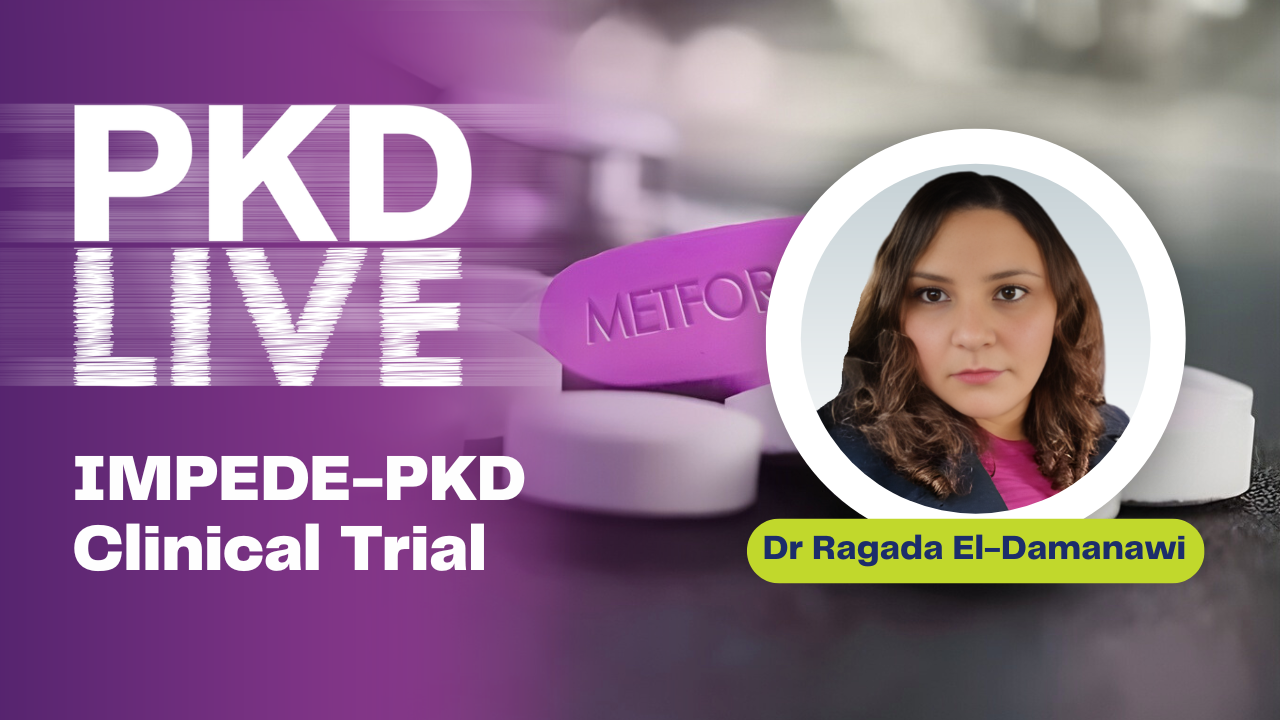
Researchers think a drug called metformin, used to treat Type 2 Diabetes, may slow down kidney damage for people with Autosomal Dominant Polycystic Kidney Disease (ADPKD). The IMPEDE-PKD trial aims to find out whether taking a metformin tablet daily compared to a placebo “dummy” tablet slows the rate of cyst growth and kidney function decline in people with ADPKD.

The UK team will also study chronic pain in ADPKD—how people manage it now, and whether metformin can help reduce it. This is a global study which aims to recruit 300 people from the UK.

Who can take part?

The clinical trial has strict inclusion criteria about who can and can’t take part.

Eligibility:

  • Confirmed ADPKD by genetic testing and/or imaging
  • eGFR ≥ 38 and < 90
  • Risk of progression due to size or aggressive genetic mutation or,
  • Active disease progression i.e. kidneys growing very fast or function declining rapidly

NB. Tolvaptan patients will be eligible to take part in the study providing they are on a stable dose, have no complications and are tolerating it well.

Exclusions:

  • Patients with diabetes
  • Patients with any condition that can affect the kidneys or the trial data including organ transplant
  • history of dialysis

 What is involved?

Participation takes place over a 12 week run-in phase followed by a 2 year treatment phase. You will have:

Screening:

  • 1 hospital visit to check eligibility

Run-in Phase:

  • Metformin daily for 10 weeks
  • 3 phone calls and 2 hospital visits

Randomisation:

  • 1 hospital visit
  • 50:50 chance of getting metformin or dummy tablets

Treatment Phase:

  • Trial medication daily for 2 years
  • 1 phone call and 5 hospital visits

The run-in phase identifies the maximum dose of metformin suitable for each individual so the dose you take may change during this time. Participants must safely and successfully complete the run-in phase before being able to complete the treatment phase. Only those participants who are eligible and willing will proceed to the treatment phase.

The study reviews will be by phone call or require you to attend the hospital (where possible these visits will be scheduled to coincide with your standard clinic appointments). The reviews are to: check it is safe for you and that you are willing to take part, collect clinical and questionnaire data to help answer the study’s questions, and give you your trial medication to take at home.

Study assessments include:

  • Medical history
  • Physical examination
  • Blood tests
  • Urine tests
  • Questionnaires

Learn more about the IMPEDE-PKD study and watch our PKD Live Q&A with Dr. Ragada El-Damanawi, Consultant Nephrologist at the Sheffield Kidney Institute and UK Chief Investigator for IMPEDE-PKD.

Youtube Preview - Video ID DH4y20rEpFwWatch on YouTube

Where can I take part?

The trial aims to have thirty participating centres across the UK. Hospitals are in the process of becoming trial centres and 32 centres are now open and actively recruiting:

North East England

  • Sunderland – Sunderland Royal Hospital
  • Newcastle upon Tyne – Freeman Hospital

North West England

  • Liverpool – Aintree University Hospital (participants recruited from both Aintree and Royal Hospitals with visits only at Aintree)
  • Salford – Salford Royal Hospital

Yorkshire and the Humber

  • Sheffield – Northern General Hospital
  • Bradford – St Lukes Hospital
  • Doncaster – Doncaster Royal Infirmary
  • York – York Hospital
  • Scarborough – Scarborough General Hospital
  • Leeds – St James University Hospital


South West and South East England

  • Exeter - Royal Devon and Exeter Hospital
  • Plymouth – Derriford Hospital
  • Gloucester – Gloucestershire Royal Hospital
  • Brighton - Royal Sussex County Hospital


 Midlands

  • Leicester – Leicester General Hospital
  • Nottingham – City Hospital
  • Coventry –  University Hospitals Coventry & Warwickshire
  • Birmingham - Queen Elizabeth Hospital


East of England

  • Hertfordshire – Lister Hospital

London and South East England

  • London – St George's Hospital
  • London – Kings College Hospital
  • London – Royal London Hospital
  • London - Hammersmith Hospital
  • Epsom – St Helier Hospital
  • Oxford – Churchill Hospital


Northern Ireland

  • Belfast – Ulster Hospital
  • Belfast – Belfast City Hospital
  • Antrim – Antrim Area Hospital
  • Londonderry – Altnaglevin Hospital
  • Newry – Daisy Hill Hospital


Wales

  • Cardiff – University Hospital of Wales
  • Bangor - Ysbyty Gwynedd


Scotland

  • Inverness – NHS Highland Clinical Research Facility


How do I find out more?

If you’d like to learn more about the trial or check your eligibility with the trial team at recruiting centres, please contact the PKD Charity PPIE Officer at [email protected]. More sites will open as the trial continues.

Further details about the trial can also be viewed here or by scanning the QR code with your mobile phone. 


ADPKD, Research, PKD

  • Hits: 8514

Draining and treating cysts

Draining and treating cysts

This information is for people with autosomal dominant polycystic kidney disease (ADPKD) and their families and friends. It explains different procedures and surgeries that can be used to treat a problem cyst.

There hasn’t been much research on this topic. We give an overview of each procedure but we’re unable to give firm facts and figures on the benefits and risks of each. Please keep this in mind when reading.

Contents

Why might I need a cyst treated?

ADPKD is an inherited condition that causes fluid-filled sacs called cysts to grow in the kidneys. These cysts gradually enlarge over the years, reducing kidney function. They can be as small as a pea to as large as a grapefruit.

ADPKD can also cause cysts in the liver.

Sometimes, individual cysts in your kidney may get infected, cause pain or bleed, especially if they’re large. Similar problems can occur with liver cysts.

Often, these problems can be treated with medicines (for example, painkillers or antibiotics). If these treatments aren’t working, you may need a procedure or surgery to treat a problem cyst.

Very large cysts (over 5 cm diameter) can also cause problems such as bloating, heartburn (acid reflux) and feeling full early on in a meal. Procedures or surgery might help here too.

What are the different procedures for treating cysts?

Procedures sometimes used to treat one or more problem cysts include:

  • Percutaneous cyst aspiration, in which an interventional radiologist (a doctor who specializes in procedures using scans to guide them) uses a long needle to remove the fluid from a cyst.
  • Sclerotherapy, in which an interventional radiologist drains a cyst and then injects a solution to kill the cyst cells.
  • Cyst deroofing (fenestration), in which a surgeon removes part of the cyst wall.
  • Transcatheter arterial embolization, in which an interventional radiologist blocks a blood vessel to an area of the kidney.

We outline each of these procedures below. There hasn’t been much research into their use in people with ADPKD. Therefore, we’re unable to say with certainty how many people with ADPKD have had these procedures, how well they work, and what proportion of people get complications. Please ask your treatment team for the latest information.

Which procedure is right for me?

The best procedure for you will depend on many factors including:

  • the problems your kidney or liver cysts are causing
  • which treatments you’ve had before and any treatments planned for the future
  • which procedures the specialists in your area have most expertise in
  • which procedure has the best balance of benefits and risks for you

Ask your interventional radiologist or surgeon to explain the risks and benefits, any unknowns and any alternatives. This will help you decide whether to proceed.

If you’re worried about having the procedure, let them know. You may also find it helpful to chat to other people who have had the procedure. You can connect with people with ADPKD through our support groups and ADPKD Facebook group. Remember that each person’s experience is different.

Percutaneous cyst aspiration

In percutaneous cyst aspiration, an interventional radiologist drains fluid out of a large cyst using a long needle.

Here are the main steps:

  • The radiologist will numb the area with a local anaesthetic.
  • Using ultrasound or a CT (computed tomography) scan to guide them, they’ll put a long needle through your skin into the cyst.
  • They’ll draw the fluid out of the cyst through the needle.

There is a chance of bleeding or getting an infection from the procedure.

Unfortunately, cysts often refill with fluid. If percutaneous cyst aspiration relieves your symptoms for a while, you might need one of the procedures below for a longer-term solution.

Sclerotherapy

Further treatment of a cyst after it has been drained can often stop it refilling. An interventional radiologist can do this by injecting ethanol or another solution into the cyst, which is called sclerotherapy. Sclerotherapy kills the cyst cells and makes scar tissue.

You’ll be offered sedation for this procedure and will have a local anaesthetic too. Sedation involves having medicines that make you feel drowsy and relaxed. Most of the effects of sedation wear off within an hour or two, but you’ll need 24 hours to fully recover.

The main steps of sclerotherapy are:

  • Your interventional radiologist will drain the cyst (see Percutaneous cyst aspiration above).
  • They’ll inject ethanol or another solution into the cyst.
  • You’ll lie in a variety of positions over about 20 minutes. This helps to ensure the ethanol touches all sides of the cyst.
  • Your radiologist will drain the solution back out of the cyst.

Sclerotherapy often causes pain, for which you’ll be given pain killers. There’s also a chance of bleeding and getting an infection. There’s a small risk of damaging nearby organs.

You’ll have a follow-up scan within a few months to check the cyst has healed.

Cyst deroofing

If you have a problem cyst, an alternative to sclerotherapy is to remove some of the cyst wall so the fluid can drain out. This is called deroofing or fenestration.

A surgeon may ask that you have percutaneous cyst aspiration first, to check that the cyst is the cause of your symptoms.

A surgeon can do deroofing surgery via keyhole surgery (laparoscopy) or open surgery. Ask your surgeon to explain which approach is best for you, including the benefits, risks and recovery times.

Before the surgery, you’ll have a checkup to make sure you’re healthy enough for the surgery. This is called a ‘pre-op’.

You’ll have the surgery under general anaesthetic.

You’ll probably need to stay in hospital for 2–3 days afterwards, and it’s common to have some pain and bloating. It will take you a few weeks to recover fully.

There’s a chance of having bleeding, an infection, or a hernia (where part of your bowel bulges through the abdominal muscle) from the surgery. More serious problems — such as a blood clot or injury to nearby organs or blood vessels — are rare.

Scar tissue forming after surgery (called adhesions) might make future surgeries harder to do. This is one of the factors for you and your surgeon to consider together.

You’ll have a follow-up appointment within a few weeks or months of your surgery to check the area has healed well.

Transcatheter arterial embolization

If you have a kidney or liver cyst that keeps bleeding, transcatheter arterial embolization might be a treatment option for you. This procedure stops the blood supply to an area of the kidney or liver and so can help to stop bleeding.

Transcatheter arterial embolization is usually only used to treat kidney cysts in people who are on dialysis or who have had a kidney transplant (and still have their own kidneys).

For this procedure, you’ll have a local anaesthetic and intravenous painkillers. You’ll be offered sedation too.

The main steps are:

  • An interventional radiologist will make a small cut in your thigh and put a very thin flexible tube (catheter) into your leg artery.
  • They’ll feed the catheter through your blood vessels to the artery within the kidney or liver that supplies the problem area.
  • They’ll use scans (such as a CT scan with a dye in your bloodstream) during the procedure to see where to guide the catheter.
  • They’ll use a metal coil or another substance to block the artery.

After the procedure you’re likely to have pain (for which you’ll be given pain killers) and fever. There’s a chance of getting an infection too.

Alternatives

If the procedures above don’t work or aren’t suitable for you and you’re having severe problems from a cyst, your treatment team might suggest a kidney transplant. You might have one or both of your kidneys removed before, during or after transplant surgery. This is called nephrectomy.

You can find information about kidney transplants and nephrectomy on our website.

If you’re having ongoing problems with liver cysts, your treatment team might recommend you have part of your liver removed or have a liver transplant. Most people with ADPKD never need these surgeries. See our web page on polycystic liver disease (PLD) for more information.

More from the PKD Charity

More information from others

Further information

All of our publications are based on references but these are removed for ease of reading on our webpages. A version of this webpage with references included is available upon request by emailing [email protected]

Authors and contributors

Written by Hannah Bridges, PhD, independent medical writer, HB Health Comms Limited. Expert review by Mr Nicholas Inston, Consultant Surgeon and Clinical Lead for Renal Surgery and Transplantation, Queen Elizabeth Hospital, Birmingham, and Mr James Barnes, Consultant Transplant, Vascular Access and Endocrine Surgeon, NHS University Hospitals Coventry and Warwickshire NHS Trust.

With thanks to all those affected by ADPKD who contributed to this publication.

Ref No: ADPKD.DTC.V1.0

Latest version: © April 2025.

Due for medical review: April 2028.

Disclaimer: This information is primarily for people in the UK. We have made every effort to ensure that the information we provide is correct and up to date. However, it is not a substitute for professional medical advice or a medical examination. We do not promote or recommend any treatment. We do not accept liability for any errors or omissions. Medical information, the law and government regulations change rapidly, so always consult your GP, pharmacist or other medical professional if you have any concerns or before starting any new treatment.

If you don't have access to a printer and would like a printed version of this information sheet, or any other PKD Charity information, call the PKD Charity Helpline on 0300 111 1234 (weekdays, 9am–5pm) or email [email protected]

The PKD Charity Helpline offers confidential support and information to anyone affected by PKD, including family, friends, carers, newly diagnosed or those who have lived with the condition for many years.

Read more …Draining and treating cysts

  • Hits: 24972

Feedback

We welcome feedback on the information provided on this webpage. If you have any feedback regarding the information provided on this webpage, please complete the Feedback Form