
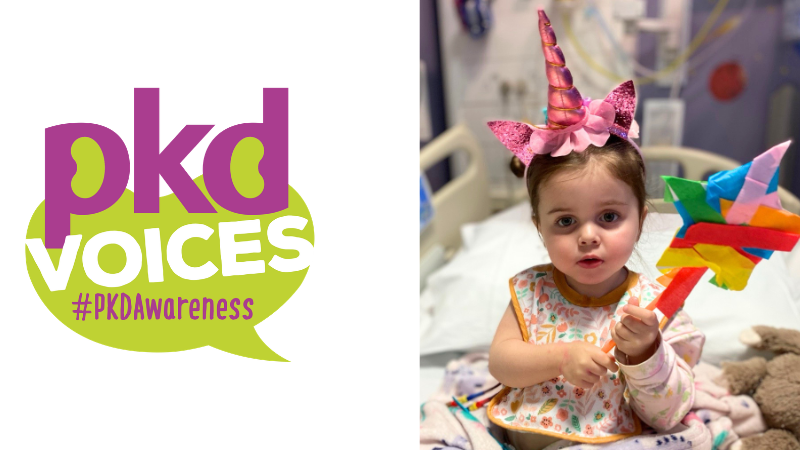
A Father’s Gift, A Daughter’s Strength: Jessica's Story
Five-year-old Jessica has spent much of her young life on a hospital ward, surrounded by machines and routines no child should have to know. In March, she reached a major milestone when she received a life-changing kidney transplant. Just weeks later, she celebrated her fifth birthday at Manchester Children’s Hospital – a reminder of how much of her childhood has been shaped by illness rather than the simple moments most families take for granted.
So far, Jessica has spent 1,024 days on dialysis, 805 days on the transplant list, and has required feeding support since she was a week old.
Just a day after she was born during the COVID-19 pandemic in 2021, her parents, Claire and Wayne, were told she had Autosomal Recessive Polycystic Kidney Disease (ARPKD), a rare and severe form of PKD affecting around one in 20,000 babies.
ARPKD occurs when both parents carry a faulty gene despite not having the condition themselves.
It can cause severe complications from birth, including breathing difficulties, liver problems, and progressive kidney failure. For Jessica, the impact was immediate.
Claire and Wayne, who both served in the military, were used to tough challenges, but nothing could have prepared them for this.
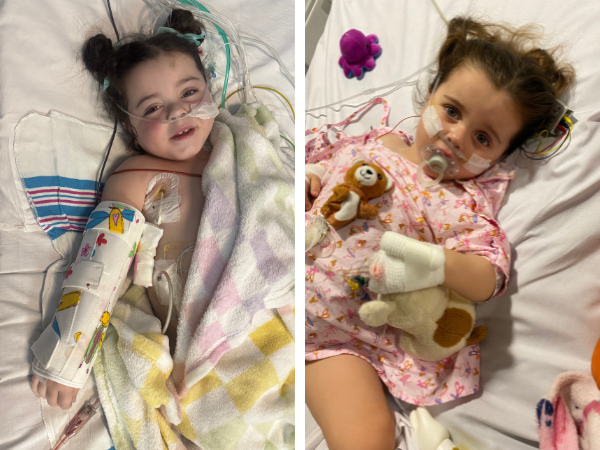
Jessica’s early years involved long hospital stays, repeated procedures, infections, and breathing difficulties. As her kidneys enlarged, they compressed her lungs and stomach, making feeding difficult. She lost weight, developed spinal curvature, and was unable to walk.
By late 2023, her kidneys had grown to more than 15cm, over double the typical size for a child her age. Surgeons made the difficult decision to remove one kidney to create space and improve feeding and weight gain, which was essential for transplant eligibility.
During this time, Jessica was taking 13 medications daily, many to control her blood pressure.
By the age of two, she was fully reliant on dialysis. After seven months of hospital treatment, family life became overwhelming, with early starts, long journeys, and constant uncertainty. Wayne’s work often takes him away, while Claire was unable to work due to Jessica’s complex care needs. To bring some stability to family life, both parents completed eight weeks of specialist training to carry out dialysis at home.
Jessica has undergone numerous procedures, including feeding tube placement, transfusions, biopsies, and treatment for complications affecting her liver and spleen. Feeding remains a daily challenge. She receives most of her nutrition through a gastrostomy tube and has developed pica, a condition that causes people to eat non-food items.
The impact on the family has been physical, emotional, and financial. Time off work, long hospital stays, and the need for full-time care have placed significant pressure on household income, adding extra stress to an already overwhelming situation.
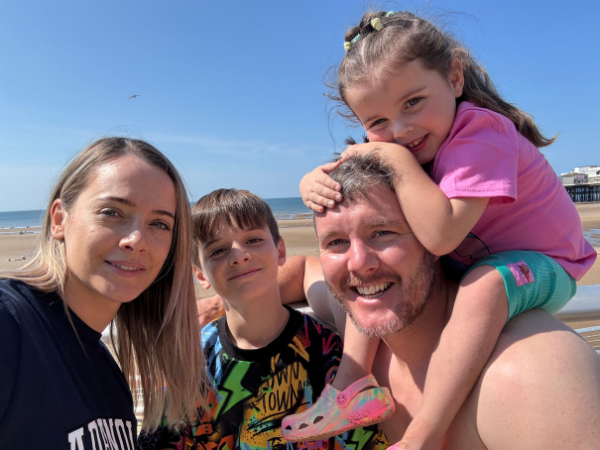
Despite everything, Jessica shows extraordinary resilience. While delayed development has affected her walking and talking, her spirit remains strong.
“Jessica is the one living it, yet she still manages to be happy,” says Claire.
“She has swapped a childhood for hospital life, and instead of feeling sorrow, she has found strength. It is both reassuring and heartbreaking at the same time. She brings us so much joy.”
A transplant was always her best long-term option. The challenge was getting her strong enough to reach that stage.
Although both parents were screened as donors, neither was a suitable match. Wayne then joined a national donor sharing scheme, donating a kidney to a stranger so that Jessica could receive a compatible one in return.
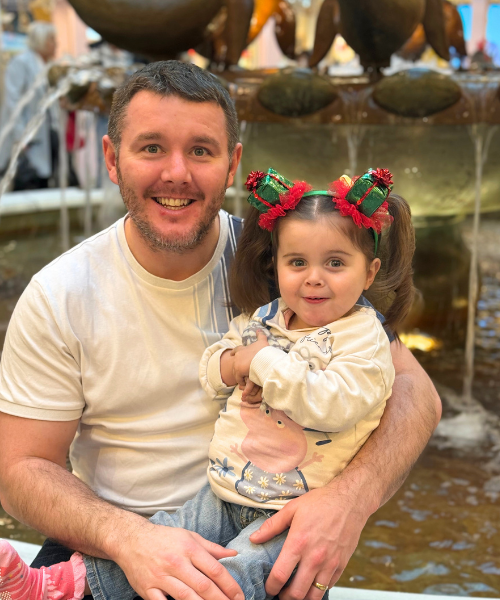 The transplant, involving a complex chain of three donors and three recipients, took place on 6 March 2026 at Birmingham Children’s Hospital, chosen for its specialist liver expertise. She was later transferred back to Manchester Children’s Hospital to recover.
The transplant marks a major step forward, although complications remain, particularly involving her liver and spleen. Recovery has not been straightforward, but thankfully her new kidney is working well.
For the first time in years, there is real hope.
Jessica’s story is one of courage, endurance, and love. Her family are inspired every day by the strength of a little girl who refuses to give up.
Claire shares Jessica’s journey on social media to raise awareness of ARPKD and support other families facing similar challenges – follow their progress on Instagram at @jessicafloyd_arpkd.
If your child has ARPKD, or you’re an adult with the condition, share your experiences.
Take part in our focus groups or surveys and help shape the support and information we provide to others. To get involved, please contact us at [email protected].
If you'd like to discuss how we can support you or a loved one, learn more about our services or contact our team today.