
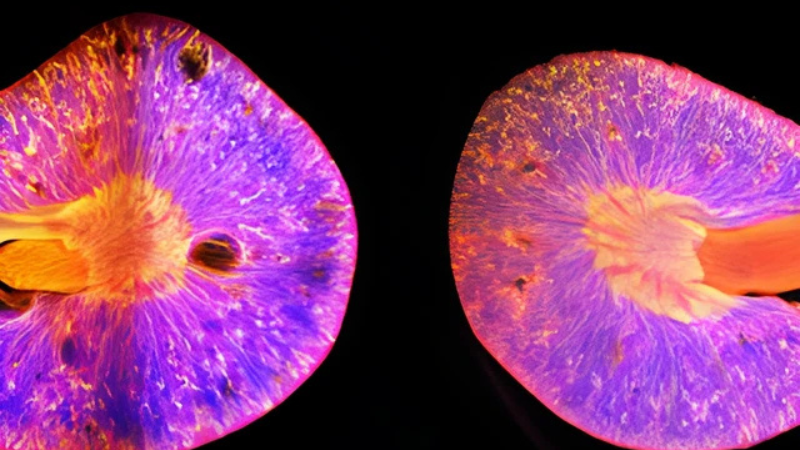
Damage to tiny kidney blood vessels is an early feature of PKD progression, UCL finds
A new study from University College London (UCL), supported by the PKD Charity, has revealed that the kidney’s tiny blood vessels (the microvasculature) are damaged in the early stages of Autosomal Dominant Polycystic Kidney Disease (ADPKD) — long before any measurable decline in kidney function. The findings were published in the journal Disease Models & Mechanisms.
What did the researchers find?
Led by Dr Daniyal Jafree and Professor David Long, the team—initially supported by a PKD Charity grant in 2021—used advanced imaging and molecular techniques to analyse both human ADPKD kidney tissue and a mouse model. They discovered:
- In kidney tissue from patients with ADPKD, a distinct group of blood vessel cells showed signs of stress and dysfunction.
- In the ADPKD mouse model, kidney blood vessels were disorganised and structurally abnormal, leading to reduced blood flow.
- Crucially, these vascular changes appeared early — before any detectable loss of kidney function.
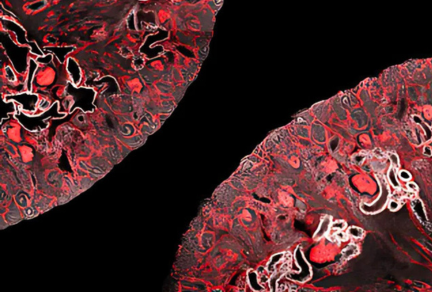
Top left: ADPKD kidney at the same stage, where tiny vessels are already abnormal, suggesting vascular changes occur very early in disease.
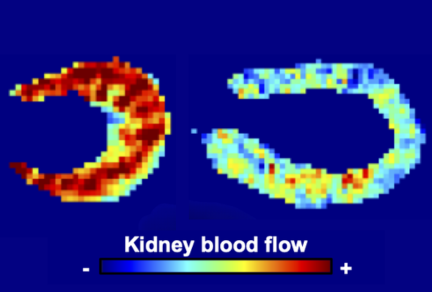
Right: Kidney from an ADPKD mouse, with dramatically reduced blood flow despite normal function.
Why this matters for patients
While cyst growth remains a major focus in PKD, this study underscores that early blood vessel damage may play an active role in disease progression. Faulty PKD genes also regulate vascular development, and vascular issues elsewhere in the body are common in ADPKD.
The research opens promising clinical possibilities:
Early detection:
- MRI-based measurement of kidney blood flow could detect disease before kidney function declines.
- Damaged vessel–derived biomarkers in the blood may help predict progression or monitor treatment response.
Future therapeutic strategies:
- Emerging therapies could target the kidney vasculature.
- These could be used alongside existing cyst-targeted drugs like tolvaptan to slow progression more effectively.
The study was funded by the PKD Charity, the Wellcome Trust and also the Rosetrees Trust.
Looking ahead
 Dr Jafree notes:
“I strongly believe research that bridges different disciplines is most likely to lead to breakthroughs that benefit patients and families. There are over 25 authors on our paper, including lab scientists, clinicians, surgeons, engineers and imaging specialists.
Showing that the kidney’s tiny blood vessels are affected in the earliest stages of ADPKD, before kidney function drops, was only possible through this kind of collaborative, cross-disciplinary work.”
Interview with Dr Daniyal Jafree here
 Professor Long adds:
“We’re delighted to have had the support of the PKD Charity for our research. These new imaging technologies have helped us show that the kidney vasculature is likely to be affected early and may contribute to ADPKD progression.
We’re now building on these findings and aiming to develop therapies that target blood vessels, that are complementary to existing drugs that target cysts.”
Elaine Davies, director of research operations at Kidney Research UK commented:
"We are delighted to see this 3D imaging technique, which was initially funded by a Kidney Research UK innovation grant, being used to advance our understanding of how PKD affects blood vessels in the kidney in this project funded by the PKD charity. Treatments to protect the blood vessels in PKD could be a promising area for future research to improve outcomes for PKD patients."

Building momentum through the PKD Partnership
Research is crucial for improving the lives of people with PKD: advancing understanding of the disease, identifying new treatments, improving management strategies, and developing better biomarkers.
The work of Dr Daniyal Jafree and Professor David Long is an exciting example of this progress, and a sign of what is on the horizon. To accelerate discoveries like this, earlier in 2025 the PKD Charity and Kidney Research UK launched the PKD Partnership — a national initiative to fund and coordinate high-impact research across the UK.
In August 2025, the partnership announced its first £1 million research funding round, supporting new projects, fellowships, and PhD studentships.
By combining infrastructure, patient engagement, and funding, the PKD Partnership will drive forward the next generation of PKD research — helping to turn breakthroughs in the lab into better treatments for patients more quickly.
ADPKD, ARPKD, Research, Grants awarded, PKD, PKDTreatment, PKD Partnership
- Hits: 6234